Central AC dead on the first hot day, blowing warm air, or tripping the breaker — emergency triage that makes the system safe and gets cooling back fast. Call (650) 555-0147 to connect with a local provider.
24/7 emergency phone lineLocal San Bruno providersWritten quote before workSe habla español
Emergency central AC repair in San Bruno, CA is for a cooling failure that cannot wait — no cooling on a hot day, a tripping breaker, water leaking indoors, or a burning smell. Call (650) 555-0147 any time. An independent local provider checks electrical and refrigerant safety first, then finds the failed part.
What Emergency Central AC Repair Covers
A central air conditioner in San Bruno lives an unusual life. Most of the year the marine layer does the cooling for free, summer highs sit in the 60s and low 70s, and the system may not run for weeks at a time. Then a September heat spell or an inland heat spillover day arrives, the house finally calls for cooling, and a system that sat idle for months fails in the first hour. That is the emergency pattern in this city: not mid-season wear, but a dormant system exposed all at once.
Not every failure is an emergency, and a good emergency call starts with honest triage. No cooling at all during a heat spell, especially with an elderly parent, an infant, or someone medically vulnerable in the house, is urgent. A breaker that trips again every time the compressor starts, a smell of hot wiring, ice building on the refrigerant lines, or water spreading from the indoor coil cabinet are urgent in a different way — that system should be switched off until it is checked. Warm air from the vents with no other warning signs sits in between: uncomfortable, and worth a same-day call rather than a wait of several days.
24/7 emergency line for no-cooling and safety calls
Breaker, burning smell and water leak triage first
Capacitors, contactors and common parts on the truck
Quoted price before repair work begins
Retrofit and older central systems handled
Serving all of San Bruno, CA 94066
How the Problem Starts — and How It's Fixed
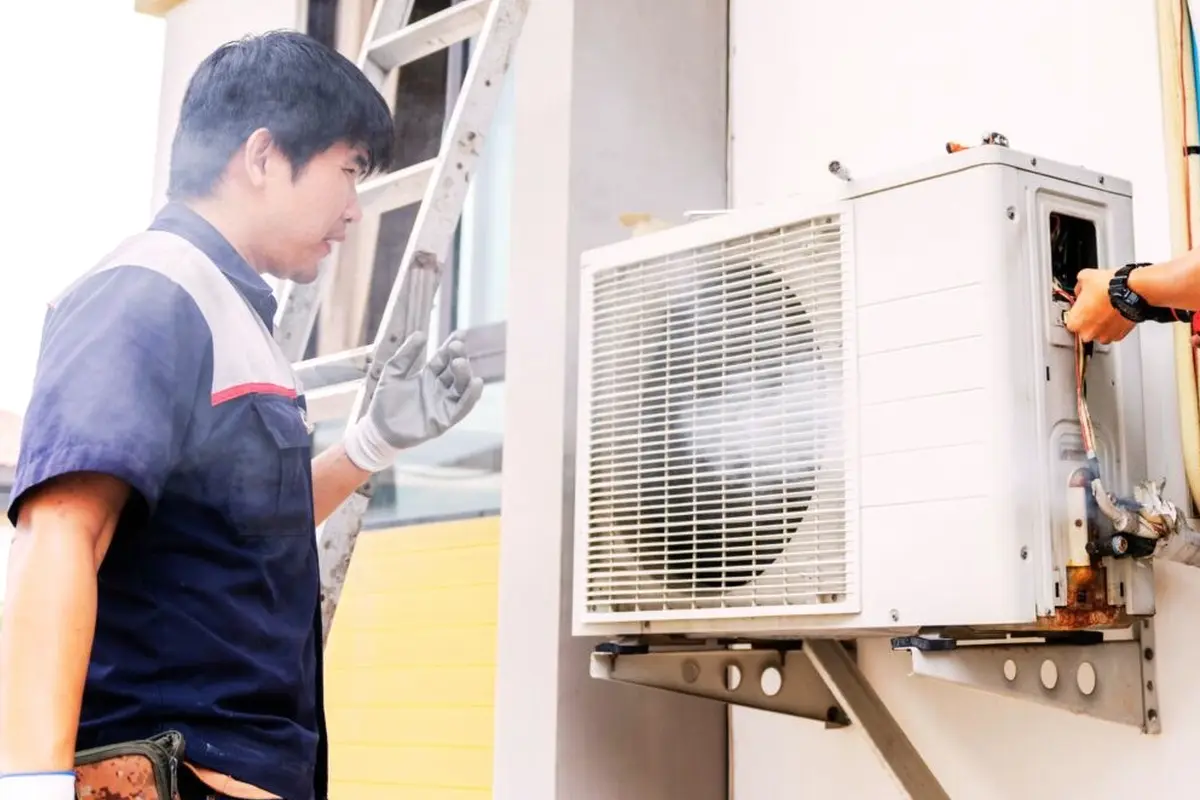
On an emergency visit the provider works in a deliberate order rather than swapping parts on a guess. The thermostat call for cooling is confirmed first, then power at the disconnect and breaker, then the outdoor unit — contactor, capacitor, compressor and condenser fan — and finally the indoor side: blower, evaporator coil, condensate drain and filter. In San Bruno homes the most common emergency findings are a weakened run capacitor that finally failed after months of sitting, a pitted contactor, low refrigerant from a slow leak that developed over winter, or a clogged condensate drain that tripped a float switch and shut the whole system down.
Corrosion is the quiet local contributor. Fog and bay air keep outdoor condensers in neighborhoods like Rollingwood and Portola Highlands damp for long stretches, and electrical contacts, coil fins and cabinet hardware age faster than they would in a dry inland city. A provider who works the Peninsula expects that pattern: terminals get cleaned and tested rather than assumed good, coil condition is reported honestly, and a compressor that will not start is tested for a hard-start condition before anyone talks about replacement. The goal of the visit is a verified repair — supply air temperature measured at a register, not just a unit that hums.
Signs You Need Emergency AC Repair
Call for emergency help rather than waiting if the AC stops during hot weather and anyone in the home is elderly, very young, or unwell; if the breaker trips repeatedly when cooling starts; if you smell burning or hot wiring; if water is leaking from the indoor unit into a ceiling, closet or floor; or if ice is forming on the copper lines or the indoor coil. Switch the system off at the thermostat for the electrical, ice and water cases — running a frozen or flooded system makes the repair bigger. Then call (650) 555-0147 and describe what you saw; that description is what lets the provider triage the call correctly.
Sign
Likely Cause
Urgency
No cooling at all, system silent
Failed capacitor, contactor, or no power at disconnect
Urgent — call now
Breaker trips when compressor starts
Shorted compressor, failed capacitor, or wiring fault
Urgent — leave breaker off
Air blows warm from every vent
Low refrigerant, compressor not running, or reversing fault
Same day during hot weather
Ice on refrigerant lines or indoor coil
Low airflow from dirty filter or low refrigerant charge
Same day — switch system off
Water leaking from indoor unit
Clogged condensate drain or tripped float switch
Urgent — switch off, protect flooring
Burning or hot wiring smell
Overheating contactor, motor, or electrical connection
Urgent — switch off and call
How the Work Gets Done
01
02
03
04
Emergency Central AC Repair in San Bruno: The Local Picture
San Bruno's housing raises the stakes on these calls. Most homes in the city were built between 1940 and 1979, and many were built without central air at all — cooling was added later as a retrofit coil on an existing furnace, with ducts that were originally sized for heating only. In San Bruno Park and Crestmoor, that means an emergency visit often involves older ductwork, an aging air handler and a condenser that has weathered decades of fog. This site connects callers with independent local providers rather than performing the work itself; start from the central AC repair in San Bruno page to see how that connection works, and if the failure is one known part, pages like AC Capacitor & Contactor Replacement explain that repair on its own.
What It Costs — and What Moves the Price
Emergency central AC repair cost in San Bruno is driven by what actually failed, whether the part is standard truck stock, and the timing of the call — after-hours work is priced differently from a weekday appointment by most providers. A capacitor, contactor or drain clearing sits at the simpler end; a compressor, blower motor or refrigerant leak repair costs more in parts, labor and testing time. What you should always receive before repair work begins is a clear diagnosis and a quoted price, so a stressful day does not turn into an open-ended bill. If the system is old and the failed part is major, the provider should also lay out the repair-versus-replace math honestly instead of selling the largest job by default.
Safety, Prevention, and What to Do Next
The safety rules for an AC emergency are simple and worth following. Never keep resetting a breaker that trips when the compressor starts — it is protecting wiring from a real fault. Never run a system with ice on the lines hoping it will clear itself; a frozen coil points to low airflow or low refrigerant, and running it can flood the compressor with liquid refrigerant. Keep the area around the indoor unit dry and clear, and never bypass a condensate float switch to get through the night — that switch exists to prevent ceiling and floor water damage. If a burning smell is present, leave the system off until it has been checked.
Stop and call if:
You see sparking or scorch marks at the outdoor unit, smell burning electrical insulation, or the breaker trips again the moment the AC starts. Switch the system off at the thermostat and the breaker, then call (650) 555-0147 — and mention you need emergency central ac repair, so you're routed to the right provider.
Common questions
Frequently Asked Questions
What counts as a central AC emergency in San Bruno?
No cooling during a heat spell, a breaker that trips every time the compressor starts, a burning or electrical smell, ice building on the lines or coil, or water leaking from the indoor unit. Those are call-now problems. A system that cools but struggles to keep up on the warmest afternoon, or one noisy vent, can usually take a same-day or next-day appointment — call (650) 555-0147, describe the symptoms, and you will be told honestly which category yours falls into.
Why did my AC fail on the first hot day of the year?
Because that day is the first real test after months of sitting idle in San Bruno's mild, fog-cooled weather. Capacitors weaken while they sit, contactor points corrode in damp marine air, and a slow refrigerant leak that started in winter only shows itself when the system finally runs under load. It is the most predictable surprise in local cooling — the full explanation is in Why Your AC Fails on the First Hot Day of the Year, and a pre-season Central AC Maintenance & Tune-Up is how most of those failures get caught in advance.
Is there anything safe I can check before calling?
Yes, three things: confirm the thermostat is set to Cool and below room temperature, check that the filter is not completely clogged, and look at the breaker and the outdoor disconnect once. If the breaker trips again when you reset it, stop there and leave it off. If you see ice, switch the thermostat to Off and set the fan to On to thaw the coil while you wait. Refrigerant, capacitors and compressor testing are not homeowner territory.
How fast can an emergency AC repair happen in San Bruno?
Response depends on call volume, and the first hot spell of the season is the busiest stretch on the Peninsula because dormant systems fail together. Emergency calls are prioritized ahead of routine work, including evenings and weekends. Many first-hot-day failures are fixed on the first visit because capacitors, contactors, filters and drain parts are standard truck stock; refrigerant leak repairs and compressor work can take longer because they require leak testing and verified charging.
Will an emergency visit cost more than a scheduled appointment?
Generally yes — after-hours and weekend emergency work is priced higher than planned weekday service by most providers, and the total also depends on the repair itself. What should never be open-ended is the price of the repair: you get the diagnosis and a firm quote before work begins, so you decide with the numbers in front of you. The emergency rate buys the timing, not a blank check.
My AC is leaking water inside the house — what should I do right now?
Switch the system off at the thermostat, which stops the coil from making more condensate, then protect the floor or ceiling below with towels or a shallow pan and move anything water-sensitive. Do not keep running the AC to stay cool — a clogged drain or failed pump only spills more water the longer it runs. Most water calls turn out to be a blocked condensate line or a tripped float switch, both fixable on one visit once the system is opened up.
How this service works
A referral service — honest by design
This website is a referral and lead-generation service, not an air conditioning contractor. When you call, we connect you with independent local cooling providers serving San Bruno who perform the diagnosis, quote, and repair themselves.
Ask the provider who visits your home for their license, insurance, and written quote before any work begins — reputable local pros expect those questions. Learn more about how this service works.