AC Refrigerant Leak Repair & Recharge in San Bruno, CA
Warm air, hissing lines, or a system that needs gas every year — leak detection, real repair, and a verified recharge for San Bruno central AC. Call (650) 555-0147 to connect with a local provider.
24/7 emergency phone lineLocal San Bruno providersWritten quote before workSe habla español
Refrigerant leak repair and recharge in San Bruno, CA means finding and fixing the leak first, then weighing in the correct charge — never just topping off. If your AC blows warm, ices up, or has needed refrigerant before, call (650) 555-0147. An independent provider leak-tests, repairs, evacuates, and verifies cooling by measurement.
What AC Refrigerant Leak Repair & Recharge Covers
Refrigerant is not a fuel. A central air conditioner is a sealed loop: the same charge circulates between the outdoor condenser and the indoor evaporator coil for the life of the system. When cooling fades and a test shows the charge is low, refrigerant left through a leak — at a coil, a braze joint, a service valve, or a line set rubbed thin where it passes through a wall. Adding gas without finding that leak buys a few weeks or months of cooling and guarantees the same call again next season.
San Bruno gives refrigerant circuits a particular enemy: moisture. Fog-line homes keep outdoor coils damp for long stretches, and formicary corrosion — the process by which indoor coil copper develops pinhole leaks, accelerated by household chemicals in the airstream — is a common finding on aging evaporator coils. In a city where most housing dates from 1940 to 1979 and many AC systems were retrofitted onto older furnaces, coils and line sets have often been in service through decades of damp Peninsula air. Slow leaks here are more often corrosion stories than damage stories.
Leak found first — no blind top-offs
Electronic, dye and nitrogen leak testing
Coil, joint and valve repairs
Evacuation and charge by measurement, not guesswork
Certified refrigerant handling and recovery
Serving all of San Bruno, CA 94066
How the Problem Starts — and How It's Fixed
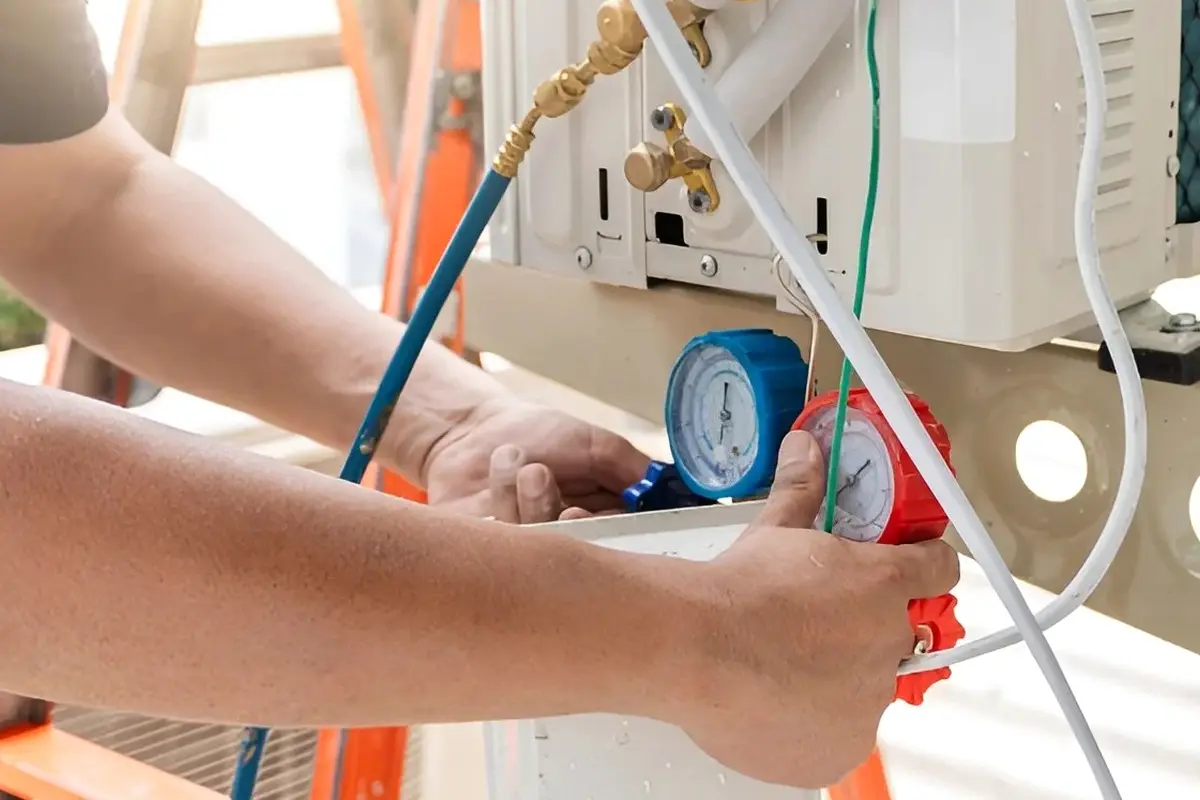
Proper leak work follows a sequence. The provider first confirms the charge is actually low by measuring pressures and superheat or subcooling — weak cooling also comes from dirty coils and low airflow, which mimic low charge. Then the circuit is searched: electronic leak detector along joints and valves, soap solution on suspect fittings, ultraviolet dye where a leak is elusive, and a nitrogen pressure test when the system is empty enough to need one. The evaporator coil in the indoor cabinet is inspected closely, because it is statistically the most common leak site and the easiest to miss from outside.
Once the leak is found, the repair matches the site. A leaking Schrader valve core or cap seal is a small fix. A braze joint can be re-brazed with nitrogen flowing to protect the inside of the tubing. A coil with multiple pinholes is a different conversation: patching one hole on a corroded coil usually means the next hole is already forming, and coil replacement — or, on a very old system, a repair-versus-replace discussion — is the honest recommendation. After any repair, the circuit is pressure-tested, evacuated to pull out air and moisture, and charged by weight or by measured superheat/subcooling, then verified at the registers.
Signs You Need Refrigerant Leak Repair
Call when cooling has faded gradually over weeks, when the air from the vents is cool but never cold, when ice appears on the larger copper line or the indoor coil, when you hear a faint hiss near the indoor unit, or when anyone tells you the system needs refrigerant added again. Needing gas two seasons in a row is the definition of an unrepaired leak. Homeowners in Mills Park and Lomita Park with older retrofit systems should call before the September heat rather than after it — leak work includes pressure testing and evacuation time, and it is far easier to schedule on a mild week. Start from the central AC repair in San Bruno page or call (650) 555-0147.
Sign
Likely Cause
Urgency
Cooling faded gradually over weeks
Slow refrigerant leak at coil, joint, or valve
Schedule this week — do not top off blindly
Needed refrigerant two years in a row
Unrepaired leak, usually evaporator coil corrosion
Book a leak search, not a recharge
Ice on the large copper line or coil
Low charge reducing coil pressure and temperature
Same day — switch off to thaw
Faint hissing near indoor unit
Active leak at coil or line connection
Same day
Air is cool but never cold
Low charge or dirty coil mimicking it
Schedule this week
Bubbles in the sight glass / low pressure readings
Charge confirmed low on gauges
Leak test before any recharge
How the Work Gets Done
01
02
03
04
AC Refrigerant Leak Repair & Recharge in San Bruno: The Local Picture
The local pattern in San Bruno is the slow, invisible leak on a system that barely runs. Because cooling demand here is episodic — a handful of warm weeks rather than a five-month season — a small leak can take two or three summers to show up as weak cooling, and by then the coil that caused it has corroded further. Providers serving 94066 expect to find damp outdoor units, leaf- and salt-filmed condenser coils, and indoor coils original to a decades-old retrofit. The How Much Does Central AC Repair Cost in San Bruno? guide explains how leak location drives cost, and the warm-air symptom itself is walked through at Why Is My Central AC Blowing Warm Air?.
What It Costs — and What Moves the Price
Refrigerant work cost in San Bruno is driven by three things: where the leak is, what the repair at that location involves, and how much refrigerant the system holds. A valve core is inexpensive in parts but the visit still includes testing, evacuation and verified charging. A re-brazed joint costs more in labor. An evaporator coil replacement is the largest version of this repair, and on an older system it must be weighed against the remaining life of the outdoor unit. Refrigerant type matters too — systems using older refrigerants cost more to charge than current ones. You should always get the leak location, the evidence for it, and a quoted price for repair-plus-recharge before authorizing the work; a quote for gas alone, with no leak search, is a quote for a temporary fix.
Safety, Prevention, and What to Do Next
Refrigerant handling is regulated for good reasons. Federal rules require certification for the technicians who open a refrigerant circuit, and venting refrigerant to the atmosphere is prohibited — a proper repair recovers what is in the system before opening it. There is a system-safety side too: running a low system can overheat and damage the compressor, the most expensive part in the circuit, and liquid refrigerant reaching a compressor that was designed to pump vapor can destroy it. If your system is icing or blowing warm, the safest economy is to run it less, not more, until it has been tested. Never ask for, or accept, a recharge with no leak check on a system that has needed gas before.
Stop and call if:
You see sparking or scorch marks at the outdoor unit, smell burning electrical insulation, or the breaker trips again the moment the AC starts. Switch the system off at the thermostat and the breaker, then call (650) 555-0147 — and mention you need ac refrigerant leak repair & recharge, so you're routed to the right provider.
Common questions
Frequently Asked Questions
Is it normal for an AC to need refrigerant every year or two?
No. A central AC is a sealed system and does not consume refrigerant. If charge is low, refrigerant leaked out, and topping off without a leak repair only restarts the clock. Systems that lose a small amount over many years still have a leak — just a slow one. The right question to ask any provider is where the leak is and what evidence they found; if the answer is only a gauge reading and a price for gas, get the leak search done properly.
How long does a recharge last if the leak is not fixed?
It depends entirely on leak size, which is exactly the problem. A pinhole coil leak might hold a charge through one warm season; a leaking valve or joint can lose it in weeks. Either way the system spends that time running below specification, which strains the compressor and raises the chance that a modest coil repair becomes a compressor conversation too. Fixing the leak is what makes a recharge a repair instead of a rental.
Can a leaking evaporator coil be repaired, or must it be replaced?
A single accessible hole on an otherwise sound coil can sometimes be repaired, but most coil leaks in older San Bruno systems are corrosion: many microscopic pits forming across the coil surface. Patching one leaves the rest already thinned, and repeat failures follow. In that case coil replacement is the durable fix, and on a system near the end of its life the provider should show you the repair-versus-replace comparison covered in Repair or Replace a Central AC? How to Decide before you decide.
Why does low refrigerant make my coil freeze?
When charge drops, pressure in the evaporator coil drops with it, and the coil surface falls below freezing. Moisture from the house air then frosts onto the coil, the frost insulates it and blocks airflow, and the freeze spreads — which drops pressure further. It is a self-reinforcing cycle, and it can also let liquid refrigerant reach the compressor. That is why the advice for a freezing system is always the same: switch it off, let it thaw fully, check the filter, and call for a charge and airflow test.
What refrigerant does my system use, and does it matter?
It matters for cost and for long-term planning. Older systems use R-22, which is no longer produced and is expensive to recharge; newer systems use R-410A or a current lower-impact refrigerant. The data plate on the outdoor unit names the refrigerant and the factory charge. A large R-22 recharge on a leaking system is often the moment the replacement conversation becomes economical, and a good provider will show you both numbers rather than deciding for you.
How is the correct charge set after a repair?
Two accepted ways: weighing in the factory-specified charge shown on the unit's data plate, or charging by measured superheat or subcooling once the system is running, depending on the metering device. Both end with verification — temperature split between return and supply air, stable pressures, and no icing after a full run. A provider who charges by feel, or by how cold the line feels to the hand, is guessing with the most expensive component in your system.
How this service works
A referral service — honest by design
This website is a referral and lead-generation service, not an air conditioning contractor. When you call, we connect you with independent local cooling providers serving San Bruno who perform the diagnosis, quote, and repair themselves.
Ask the provider who visits your home for their license, insurance, and written quote before any work begins — reputable local pros expect those questions. Learn more about how this service works.