Cooling Guide · San Bruno, CA
Central AC Not Turning On? Checks Before You Call
No hum, no fan, no cold air, and guests arriving Saturday. Six safe checks that restart a surprising share of silent systems, and the silences that mean call. Written for San Bruno homes — the cooling systems, housing, and fog-line climate on your street.
Work the list in order, because each check rules out a category
Start at the thermostat: set it to Cool, drop the temperature well below the room reading, and replace the batteries if it uses them, because a fading battery is a famously quiet killer of cooling calls. Next, the breaker panel: find the AC circuit, and if it has tripped, reset it once. Once only. A breaker that trips again immediately is reporting an electrical fault, not asking for persistence. Third, the outdoor disconnect, the small box on the wall near the condenser: confirm its handle or pull-out block is fully seated, because these get disturbed by gardeners, painters, and stored bikes all winter.
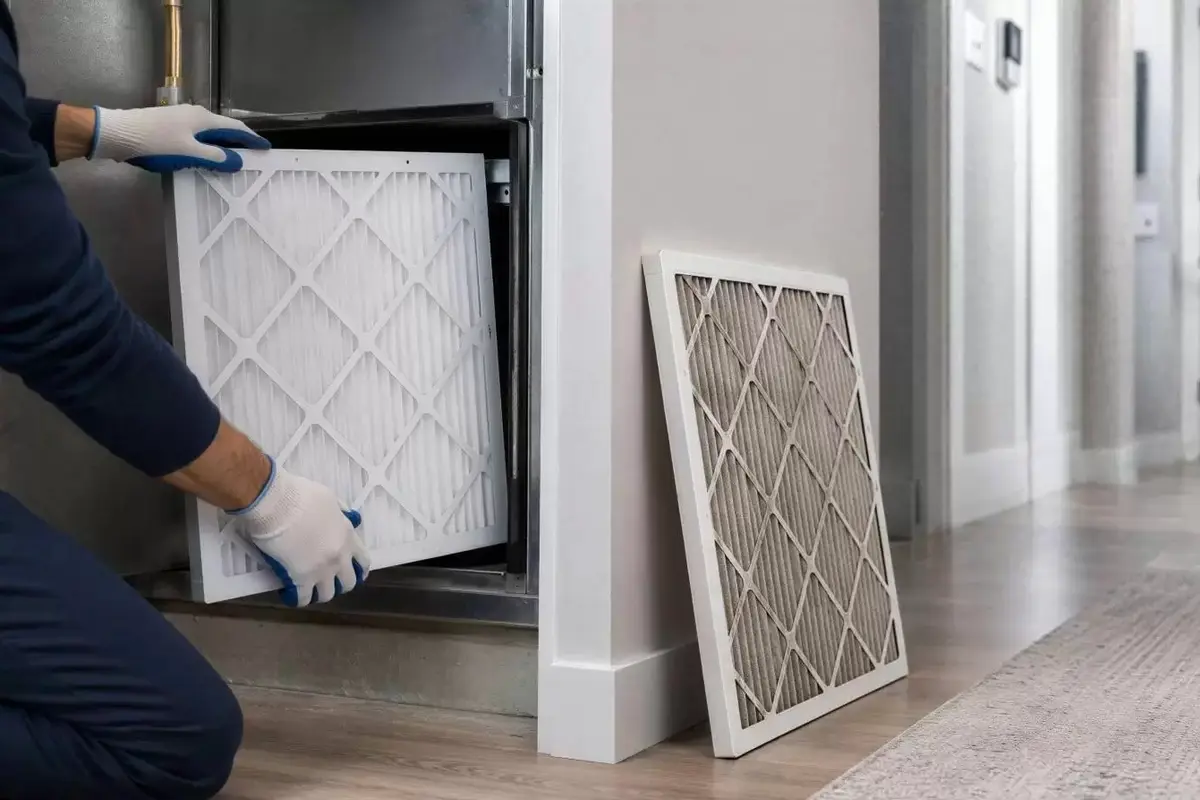
Fourth, the filter, and fifth, a check most homeowners have never heard of: the condensate float switch. Your indoor unit produces water as it cools, and if the drain clogs, a small float switch shuts the whole system down to prevent an overflow, leaving a silent AC and, sometimes, water near the indoor unit. In San Bruno's damp climate, drain lines grow slime happily during the idle months. If you find standing water in the drain pan, do not keep trying to run the system; that shutdown is the switch doing its one job correctly. A float switch that has tripped once will usually trip again until the drain itself is cleared, so note it even if the system restarts.
Read the silence: three different kinds of nothing
Not all silence is the same, and separating the kinds takes one minute at the equipment. Total silence everywhere, indoor and outdoor, with a blank thermostat, is a power or low-voltage control problem: breaker, disconnect, a blown control fuse, or the transformer. A running indoor blower with a silent outdoor unit means the house side has power and the call is dying between the thermostat and the condenser, or inside the condenser's own controls: contactor, capacitor, or its local wiring, the territory of AC Capacitor & Contactor Replacement.
The third kind is a brief attempt: a hum or click from the outdoor unit, then nothing, repeating every few minutes. That is a system trying to start and failing, most often a capacitor too weak to get the compressor or fan motor turning. Note which silence you have, because when you call (650) 555-0147, it clicks and hums but never starts sends the provider down a completely different path from the thermostat screen is blank. Precise reporting is not a courtesy; it is half the diagnosis, and it costs you nothing but attention. Write the observation down rather than trusting memory, because by the time the provider arrives the pattern may have changed or disappeared entirely.
The starting parts that fail while a system sits idle
San Bruno gives its air conditioners an unusual working life: long, damp idleness broken by short, important bursts of work. The parts that start the system suffer most from that rhythm. Capacitors lose strength with age and heat and can drift out of specification while the system never runs at all. Contactor points pit and corrode, helped along by marine moisture, until the contacts that should carry heavy current to the compressor barely conduct. By the first hot afternoon, the system has power, the thermostat is calling, and the starting chain simply cannot deliver.
These are also, not coincidentally, among the most straightforward repairs in the trade once they are actually tested, which is why guessing is such a waste. A capacitor is condemned by a meter reading against its rating, not by its age or appearance, and a contactor by voltage measurements in and out. The starting-circuit picture is laid out on the Emergency Central AC Repair page for homeowners who want to understand what will be tested. Resist any diagnosis that replaces starting parts one by one until something works; that is shopping, not testing. Testing takes minutes longer and saves the cost of every wrong part that a guess would have installed and then quietly kept.
- Thermostat on Cool, set low, fresh batteries if it uses them
- Breaker reset once only; a repeat trip is a fault report
- Outdoor disconnect fully seated after the winter's knocks
- Clogged condensate drain trips a float switch that silences all
- Hum-and-stop attempts point at the capacitor or contactor
- Describe your exact kind of silence when you call
The silences that are warnings, not inconveniences
Sometimes a system will not start because it is protecting the house or itself, and defeating that protection is how small faults become expensive ones. The float switch shutdown described above prevents water damage. A system that tripped its breaker on a genuine short is refusing a fault that resetting will not cure. A compressor that has overheated and shut down on its internal protection needs to cool and be diagnosed, not be cycled repeatedly from the thermostat in the hope that this attempt will be different from the last five.
So the rule for San Bruno homeowners is: do the five checks once, carefully, then stop and call with your observations. If the system starts on one of the checks, note which one, because that note is gold if the fault returns. If nothing revives it, you have still done real diagnostic work, and the provider arrives knowing the power, settings, filter, and drain story already. Start from the fast San Bruno central AC repair page or call with your version of the silence described as exactly as you can. The quiet system that gets described well gets fixed first, especially in a September rush. In that week, the households with clear notes are triaged faster than the households still trying to remember what the thermostat showed.
Common questions
Frequently Asked Questions
Why did my AC work last fall and refuse to start this year?
Because the failure probably happened during idleness, not during use. Capacitors drift out of range sitting in a damp cabinet, contactor points oxidise, and drain lines clog with growth while no water flows to flush them. The first call for cooling is simply the first test since those quiet changes completed. San Bruno's long, mild off-season hides more faults this way than hard use ever creates, which is the entire argument for a test run before the heat arrives.
The indoor fan runs but the outdoor unit is dead. What does that mean?
It means power and controls on the house side are alive, and the break is downstream: the signal to the condenser, the contactor, the capacitor, or the condenser's own power path. That split is genuinely useful information, because it rules out the thermostat batteries, the main breaker for the air handler, and several other suspects in one observation. Tell the provider that pattern; Thermostat Repair & Replacement helps separate a signal problem from a condenser problem.
Is it safe to reset the breaker a few times to see if it holds?
No. One reset after checking for an obvious cause is reasonable; repeated resets push current into a fault that has already announced itself, and can damage the compressor, the contactor, or the wiring you are hoping is fine. A breaker that will not hold is a measurement waiting to happen, not a negotiation. Switch it off, leave it off, and describe the behaviour when you call. Electrical faults found early are repairs; electrical faults argued with become replacements.
What is a condensate float switch, and why have I never heard of it?
It is a small safety switch in or near your indoor unit's drain pan that shuts the system down if condensate water rises instead of draining away. You have never heard of it because it is invisible for years at a time, until the drain clogs and it does its job. In San Bruno's damp garages and closets, clogged drains are a routine cause of a completely silent system whose cooling parts are fine.
How this service works
A referral service — honest by design
This website is a referral and lead-generation service, not an air conditioning contractor. When you call, we connect you with independent local cooling providers serving San Bruno who perform the diagnosis, quote, and repair themselves.
Ask the provider who visits your home for their license, insurance, and written quote before any work begins — reputable local pros expect those questions. Learn more about how this service works.
AC out? House warming up?
Get a Local AC Pro on the Phone
Call now and describe the problem — you'll be connected with an independent San Bruno provider who can help today.
(650) 555-0147 Call NowProudly Serving San Bruno, CA
Serving San Bruno, CA 94066