Cooling Guide · San Bruno, CA
Frozen AC Coil: Causes, What to Do, and When to Call
Ice belongs in drinks, not on air conditioners. Why coils freeze in a city this mild, the thaw-first rule, and the two root causes behind almost every case. Written for San Bruno homes — the cooling systems, housing, and fog-line climate on your street.
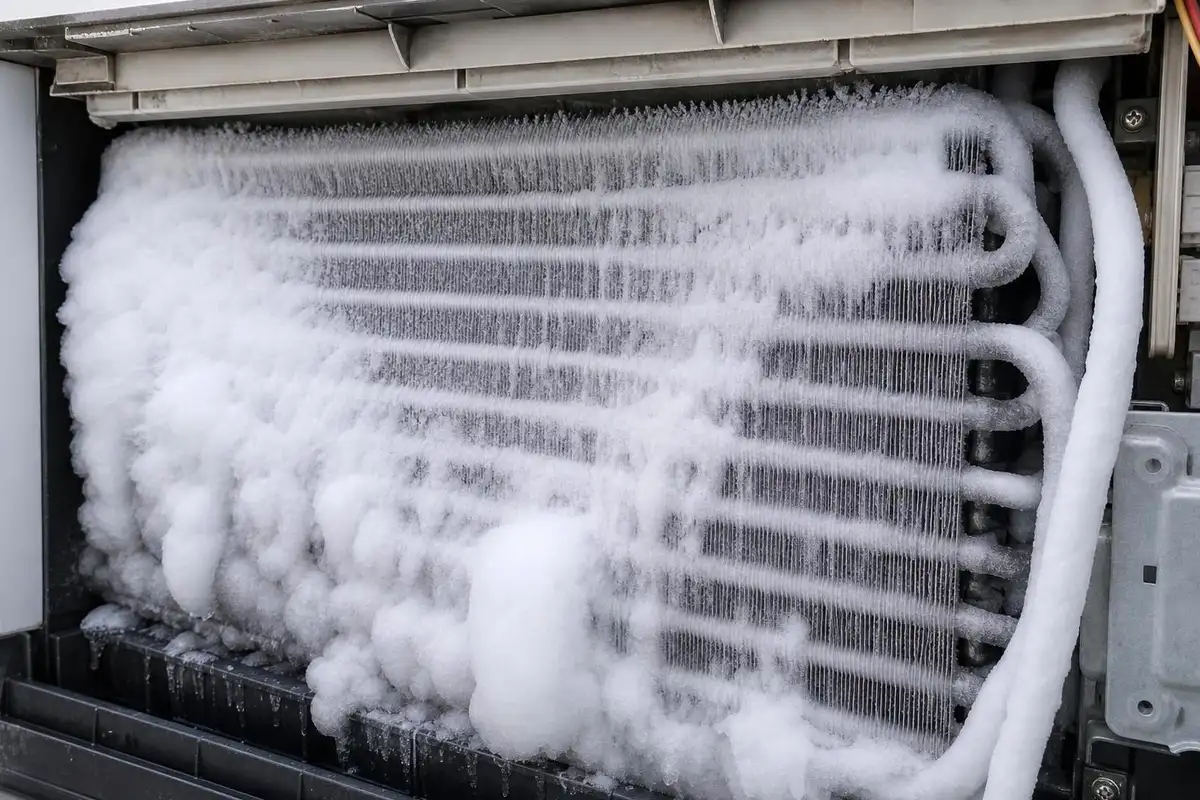
How a coil freezes in a city that rarely gets hot
It surprises San Bruno homeowners that a system can make ice while failing to cool the house, but the physics is straightforward. The indoor coil is designed to run cold while a strong stream of house air passes over it, handing it heat. Restrict that air, or drop the refrigerant pressure, and the coil surface falls below freezing; moisture from the air then builds as frost, the frost insulates the coil, airflow falls further, and within hours the coil can be a solid block of ice with a system still bravely running and accomplishing almost nothing.
The mild local climate actually helps the process along in one specific way: San Bruno systems often run on cool, foggy evenings and shoulder-season days when the house needs only a little cooling. Low outdoor temperatures plus a marginal filter or a slightly low charge push a borderline coil over the freezing line that a hotter climate, paradoxically, might never approach. So a frozen coil here does not mean your system worked too hard. It usually means it worked with too little air or too little refrigerant, and both causes deserve a proper answer rather than a hopeful restart.
What to do in the first hour: thaw, do not force
Switch the thermostat from Cool to Off, and set the fan to On so room air melts the ice faster. Expect water, and plenty of it: a thawing coil drains a surprising volume, so check the pan and the area around the indoor unit, and make sure the drain is coping. Do not chip at the ice, do not pour hot water on the coil, and do not simply restart the cooling to see if it behaves now. A system restarted half-thawed will refreeze, and a compressor fed with floodback from a frozen coil is a compressor being damaged in real time.
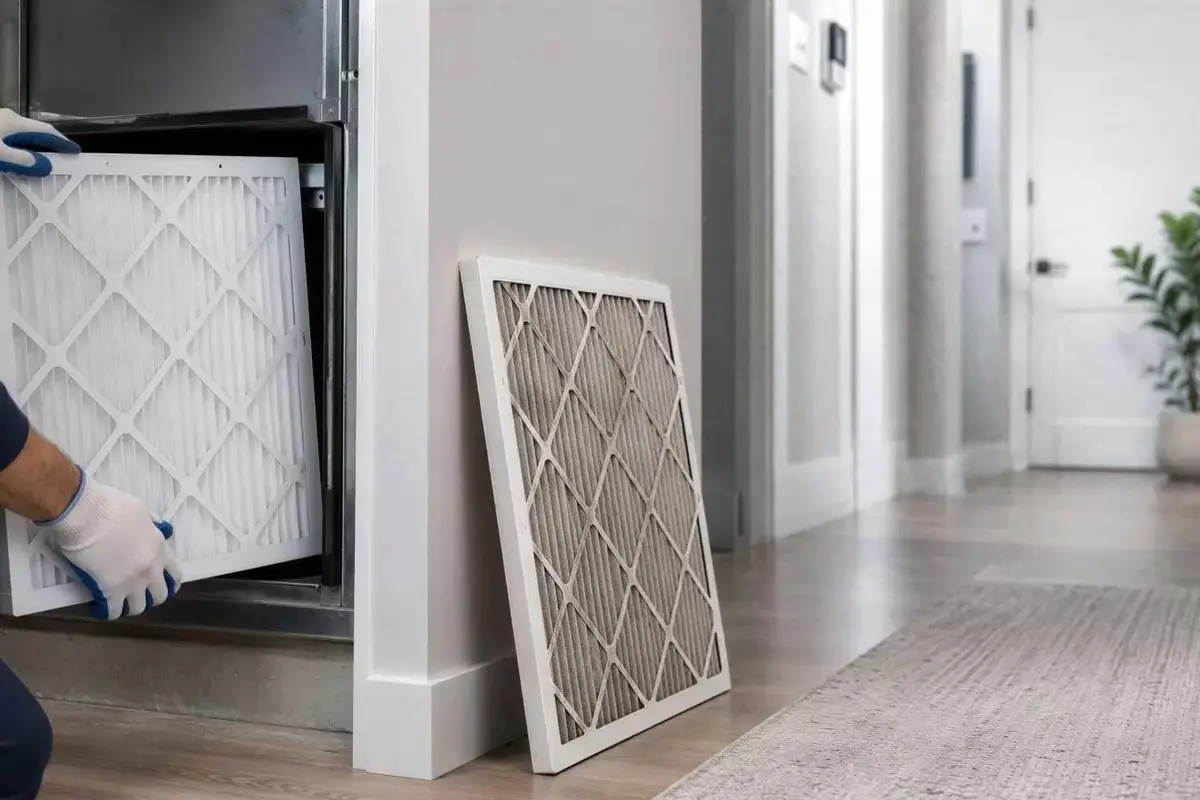
While it thaws, do the one repair that is genuinely yours: the filter. Pull it, and if it is grey, matted, or dated from a season you cannot quite remember, replace it. Filters are the leading airflow cause, and the cheapest. In homes across Crestmoor and San Bruno Park, where many systems are retrofits fitted into houses built between 1940 and 1979, filters also live in awkward places, return grilles and furnace slots that go unopened for years. Find yours, note its size on your phone, and let the system thaw fully before judging anything.
The two root causes, and how a provider separates them
Once thawed, with a clean filter, a healthy system should cool without refreezing. If ice returns, the cause is one of two families. Airflow: a blower motor weakening, a blower wheel furred with dust, collapsed or undersized ductwork on an old retrofit, or too many closed registers starving the coil. Refrigerant: a leak that has dropped the charge until pressures and coil temperatures fall below freezing even with perfect airflow. The Frozen Evaporator Coil Repair page details how the visit separates the two, using airflow measurement and refrigerant pressures rather than opinion.
The separation matters because the wrong fix is worse than useless. Adding refrigerant to an airflow problem overcharges a system and leaves the freeze untouched; replacing a filter on a leaking system buys a few cool days and a bigger eventual bill. This is also why a frozen coil should never be diagnosed from a photograph or a phone description alone. Ice is a symptom with two very different diseases behind it, and the test sequence is short, definite, and worth insisting on. A provider who thaws, measures, and then talks is doing the job in the right order.
- Switch cooling Off, fan On, and let the ice thaw fully
- Expect meltwater: watch the drain pan while it thaws
- Replace the filter during the thaw, and note its size
- Never chip ice or restart a half-thawed system
- Refreezing after a clean filter means airflow or refrigerant
- Ice on the outdoor lines too means call today
When a frozen coil is a call today, not a weekend project
Call promptly if the coil refreezes after a clean filter and a complete thaw, if ice is forming on the outdoor unit's copper lines as well as indoors, if the system freezes within an hour or two of restarting, or if you find the drain pan overflowing as the ice melts. Those patterns point at refrigerant loss or serious airflow failure, and every cycle run in that state is hard, inefficient wear on the compressor, the single most expensive component in the system. The math of waiting is poor in exactly the cases where the repair is still moderate.
There is also a seasonal reason to act in San Bruno: a coil that froze during a mild June test will freeze harder and faster in the real September heat, when the system runs longer and the failure lands in the busiest week of the local trade's year. Book the diagnosis while the weather is still on your side. Start from the fast San Bruno central AC repair page or call (650) 555-0147 and say the words frozen coil plus what you have already done, filter and thaw included. That short report is exactly what a provider needs to arrive with the right plan.
Common questions
Frequently Asked Questions
Can I just let it thaw and run it again?
Once, with a new filter, as a test, yes; as a routine, no. If the freeze was caused by a neglected filter, the thaw-plus-filter sequence genuinely fixes it, and a system that then cools cleanly for weeks has told you so. If it refreezes, the system has answered the question. At that point the cause is airflow deeper in the system or a refrigerant leak, and both need measurement rather than repetition.
How long does a frozen coil take to thaw?
Plan on several hours, and overnight is not unusual for a solidly frozen coil in a cool garage. Running the fan with the cooling off speeds it. Judge by inspection: the coil and the insulated copper line should be free of frost, and the meltwater should have stopped dripping, before cooling restarts. Restarting early because the house is warm is understandable and counterproductive; a half-frozen coil simply starts the whole process again from a head start.
Will a frozen coil damage my AC if it happens once?
A single freeze, caught and thawed properly, usually does no lasting harm; the damage story is written by repetition and by running the system while it is frozen. Liquid refrigerant can return to a compressor that is built to compress gas, and that is a genuinely destructive event. Treat the first freeze as information and the second as an appointment. Homeowners who respond that way almost never turn a coil freeze into a compressor replacement.
Why does my coil freeze at night more than in the day?
Because the ingredients gather at night in San Bruno: outdoor temperatures fall with the marine layer, the house needs less cooling so airflow and run patterns change, and a system with a slightly low charge or a borderline filter hovers near the freezing threshold that daytime warmth kept it above. Night freezing is therefore a clue in itself, worth mentioning when you call. The refrigerant side of that story is explained at AC Refrigerant Leak Repair & Recharge, and providers will ask when it happens.
How this service works
A referral service — honest by design
This website is a referral and lead-generation service, not an air conditioning contractor. When you call, we connect you with independent local cooling providers serving San Bruno who perform the diagnosis, quote, and repair themselves.
Ask the provider who visits your home for their license, insurance, and written quote before any work begins — reputable local pros expect those questions. Learn more about how this service works.
AC out? House warming up?
Get a Local AC Pro on the Phone
Call now and describe the problem — you'll be connected with an independent San Bruno provider who can help today.
(650) 555-0147 Call NowProudly Serving San Bruno, CA
Serving San Bruno, CA 94066