AC Capacitor & Contactor Replacement in San Bruno, CA
The outdoor unit hums but will not start, or clicks and does nothing — the two small electrical parts behind most no-start calls in San Bruno. Call (650) 555-0147 to connect with a local provider.
24/7 emergency phone lineLocal San Bruno providersWritten quote before workSe habla español
Capacitor and contactor replacement in San Bruno, CA fixes the two small electrical parts that start your AC — the capacitor that strengthens the motors, and the contactor switch that sends them power. If the outdoor unit hums, buzzes, or stays silent, call (650) 555-0147. An independent provider tests both parts by measurement before replacing either.
What AC Capacitor & Contactor Replacement Covers
Ask Peninsula providers what fails most on the first hot day and the answer is rarely glamorous: capacitors and contactors. The run capacitor is a small can that stores and releases energy to keep the compressor and condenser fan motor running efficiently; the start components help the compressor overcome its own inertia at every startup. The contactor is the heavy-duty relay that closes when the thermostat calls for cooling and delivers high-voltage power to the outdoor unit. Both parts work hard, live outdoors, and age invisibly — and both tend to announce themselves on exactly the day San Bruno finally gets hot.
The local aging pattern is unmistakable. Capacitors lose strength gradually with heat and time, and a system that sits through San Bruno's long, mild, fog-damp months gives a weakening capacitor no reason to reveal itself until a September startup under full load. Contactors suffer the marine version of wear: their contact points arc a microscopic pit every time they close, and months of damp air corrode and roughen those points between uses, so the switch that worked in October chatters, sticks, or welds itself in the spring. Small parts, city-specific failure stories.
Capacitors tested in microfarads, not by looks
Contactors checked for pitting, chatter and voltage drop
Exact microfarad, voltage and amp matching
Multiple start tests before the visit ends
Both parts carried as standard truck stock
Serving all of San Bruno, CA 94066
How the Problem Starts — and How It's Fixed
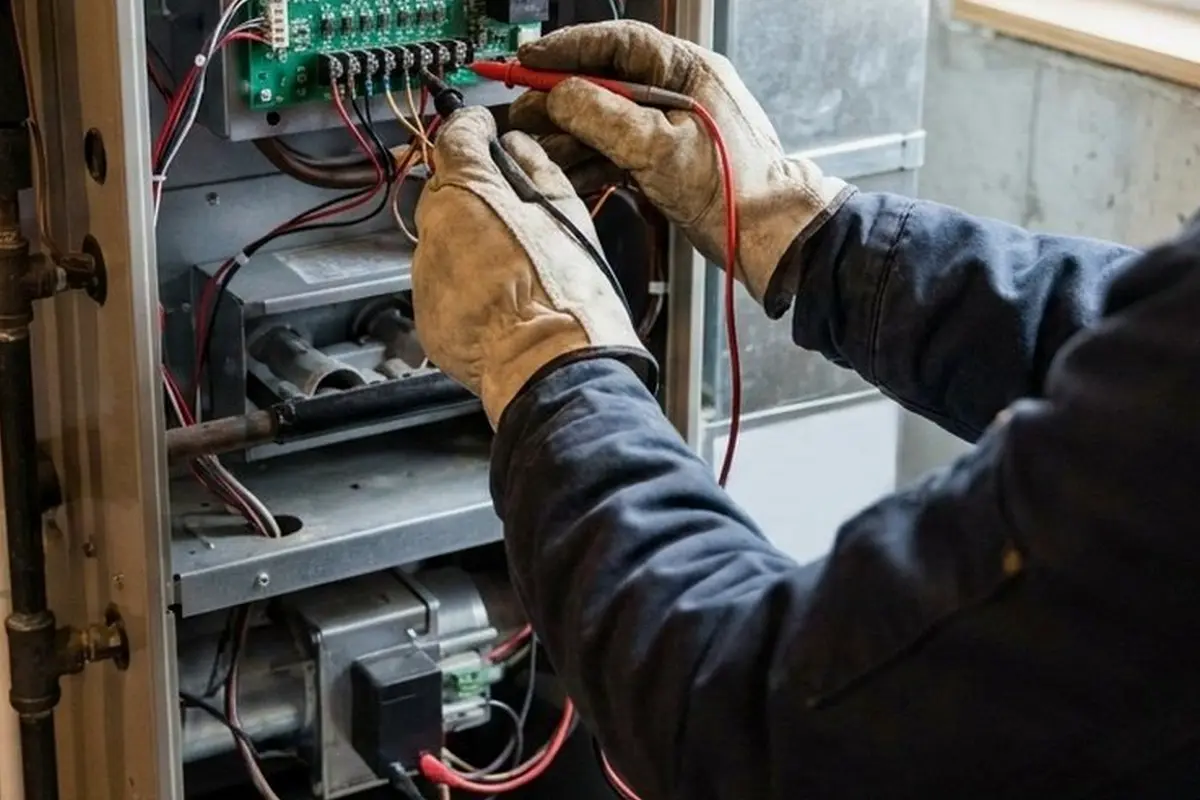
Diagnosis is by instrument, not by appearance. A capacitor is discharged safely, removed from the circuit, and measured for capacitance against the microfarad rating printed on its case — a capacitor rated at 45 microfarads that measures 31 is a failed part even if it looks perfect, and even a bulged or leaking case is only the visible version of the same failure. The contactor is tested for coil signal from the thermostat, for voltage drop across its closed points (pitted points steal voltage and make compressors run hot), and for the chattering or buzzing that means its coil or points are at the end. Both tests take minutes and give numbers, which is how this repair should always start.
Replacement means matching the part, not approximating it. Capacitors are specified by microfarad rating and voltage, and dual-run capacitors serve both compressor and fan from one can — the match must be exact. Contactors are matched by amp rating, coil voltage and pole configuration. After the swap, the provider starts the system repeatedly, measures compressor and fan amp draw, and confirms the contactor pulls in cleanly without chatter. A thorough visit also asks why the part failed: a capacitor killed early often points to a compressor drawing excess current, and a welded contactor can mean the compressor was short-cycling — causes worth reporting, covered further at AC Compressor Repair & Replacement.
Signs You Need Capacitor & Contactor Repair
Call when the outdoor unit hums for a few seconds and stops, when you hear a click or buzz from the condenser but the fan and compressor never start, when the fan spins but the compressor never joins, when cooling works in the morning and fails on a hot afternoon, or when the system will not start at all after months of sitting. The humming case deserves promptness rather than patience: every start attempt against a failed capacitor strains the compressor, so switch the thermostat off once the pattern is clear and call (650) 555-0147. If the outdoor unit runs continuously and will not shut off even when the thermostat is satisfied, that is the opposite contactor failure — welded points — and also a call-now symptom.
Sign
Likely Cause
Urgency
Outdoor unit hums, never starts
Run capacitor too weak to start compressor
Same day — stop repeated start attempts
Click or buzz, nothing starts
Contactor coil failed or points not closing
Same day
Fan spins, compressor silent
Compressor side of dual capacitor failed
Same day
Works mornings, fails hot afternoons
Capacitor loses strength as it heats
Schedule this week — classic early failure
Outdoor unit will not shut off
Contactor points welded closed
Urgent — switch off at disconnect
System starts, then stalls and retries
Pitted contactor points dropping voltage under load
Same day
How the Work Gets Done
01
02
03
04
AC Capacitor & Contactor Replacement in San Bruno: The Local Picture
In Belle Air Park and the lower, bay-side streets of San Bruno, outdoor units sit in damp side yards where fog settles and stays; in Rollingwood, they sit on exposed hillside pads in the wind. Both environments eat contact points and capacitor terminals, which is why Peninsula providers carry a full range of capacitors and contactors as standard truck stock — the first-hot-day call wave is mostly these two parts. Homeowners can help the next visit go faster with one detail: the age of the outdoor unit and whether anyone has replaced these parts before. That history, noted when you connect through the AC repair in San Bruno page, tells the provider how much of the start circuit is original.
What It Costs — and What Moves the Price
This is among the most affordable repairs in central air conditioning: the parts themselves are modest, the labor is short, and the diagnosis is certain because both parts are measured against printed specifications. Cost varies mainly by whether one part or both have failed together — a common pairing, since a weak capacitor makes the contactor's job harder and vice versa — and by the unit's tonnage, which sets the contactor's amp rating. Where quotes for this repair go wrong is scope creep: a capacitor visit should not silently become a system pitch. You should hear the measured value of the old part, the rating of the new one, and one clear price before the swap.
Safety, Prevention, and What to Do Next
Small parts, serious electricity. A capacitor stores a charge even with the power off, and it must be discharged properly before handling — the classic homeowner injury in AC comes from exactly this assumption that disconnected means safe. The contactor carries full line voltage to the compressor, and its replacement is power-off, verified-dead work. For homeowners, the safe boundary is observation: note the sounds, check the thermostat and breaker once, and leave the inside of the condenser cabinet to a provider. Also treat a welded contactor — an outdoor unit that will not stop running — as more than an annoyance: shut it down at the disconnect or breaker if cooling will not stop, because a compressor that never rests overheats.
Stop and call if:
You see sparking or scorch marks at the outdoor unit, smell burning electrical insulation, or the breaker trips again the moment the AC starts. Switch the system off at the thermostat and the breaker, then call (650) 555-0147 — and mention you need ac capacitor & contactor replacement, so you're routed to the right provider.
Common questions
Frequently Asked Questions
How long do AC capacitors last in San Bruno?
Typically five to ten cooling seasons, but the local pattern skews the story: San Bruno systems run few hours per year, so capacitors here age more by calendar, heat exposure in the cabinet, and damp off-season months than by run time. A capacitor can test fine at a spring tune-up and still fail in a September heat spell if it was near the edge. That is why a Central AC Maintenance & Tune-Up measures the value rather than eyeballing the part.
Can I replace a capacitor myself?
The part is inexpensive and sold widely, but the job involves a component that holds a charge after power is cut, exact microfarad matching, and wiring that must go back terminal-for-terminal. A mis-wired dual capacitor can damage the compressor or fan motor it was meant to save. Given that a provider visit also tests the contactor, amp draws and the reason the part failed, most homeowners sensibly leave this one to a call — and nobody should ever reach into a condenser cabinet with the disconnect still in.
What does a bad contactor sound like?
Listen at the outdoor unit when cooling is called for. A healthy contactor makes one firm click. A failing one may buzz or chatter as its points struggle to hold, click without anything starting if its coil has failed, or make no sound at all. The silent version of failure is the welded contactor: the unit keeps running after the thermostat is satisfied because the points fused shut during a hot run. Each sound maps to a different internal failure, which is why describing it on the call helps.
Why did my AC work last year and not start this year?
Because these two parts fail while systems sit. Over San Bruno's long idle stretch, capacitor electrolyte ages and contact points corrode in fog-damp air, and nothing tests them until the first real call for cooling. The system did not break on the hot day — it broke quietly over winter and was discovered on the hot day. It is the single most common story behind Why Your AC Fails on the First Hot Day of the Year, and the reason a short pre-season run test in a mild month is worth doing.
Should the capacitor and contactor be replaced together?
Only if both test weak — which happens often enough that a good provider measures both on the same visit. They age in the same cabinet, under the same conditions, and each one's failure accelerates the other's wear: a weak capacitor makes starts longer and hotter for the contactor points, and pitted points make the compressor start under low voltage, straining the capacitor. Replacing a proven-weak pair in one visit is sound; replacing either one without a measurement is guessing.
Will a new capacitor make my AC cool better?
If the old one was weak, yes — noticeably. A compressor running on a low capacitor draws more current, runs hotter, and may short-cycle or fail to start on hot afternoons, all of which look like weak cooling. Restoring the correct capacitance restores full motor torque and normal running. What a capacitor cannot do is fix low refrigerant, a dirty coil or a failing compressor, which is why the visit includes those checks if cooling is still not right after the swap.
How this service works
A referral service — honest by design
This website is a referral and lead-generation service, not an air conditioning contractor. When you call, we connect you with independent local cooling providers serving San Bruno who perform the diagnosis, quote, and repair themselves.
Ask the provider who visits your home for their license, insurance, and written quote before any work begins — reputable local pros expect those questions. Learn more about how this service works.