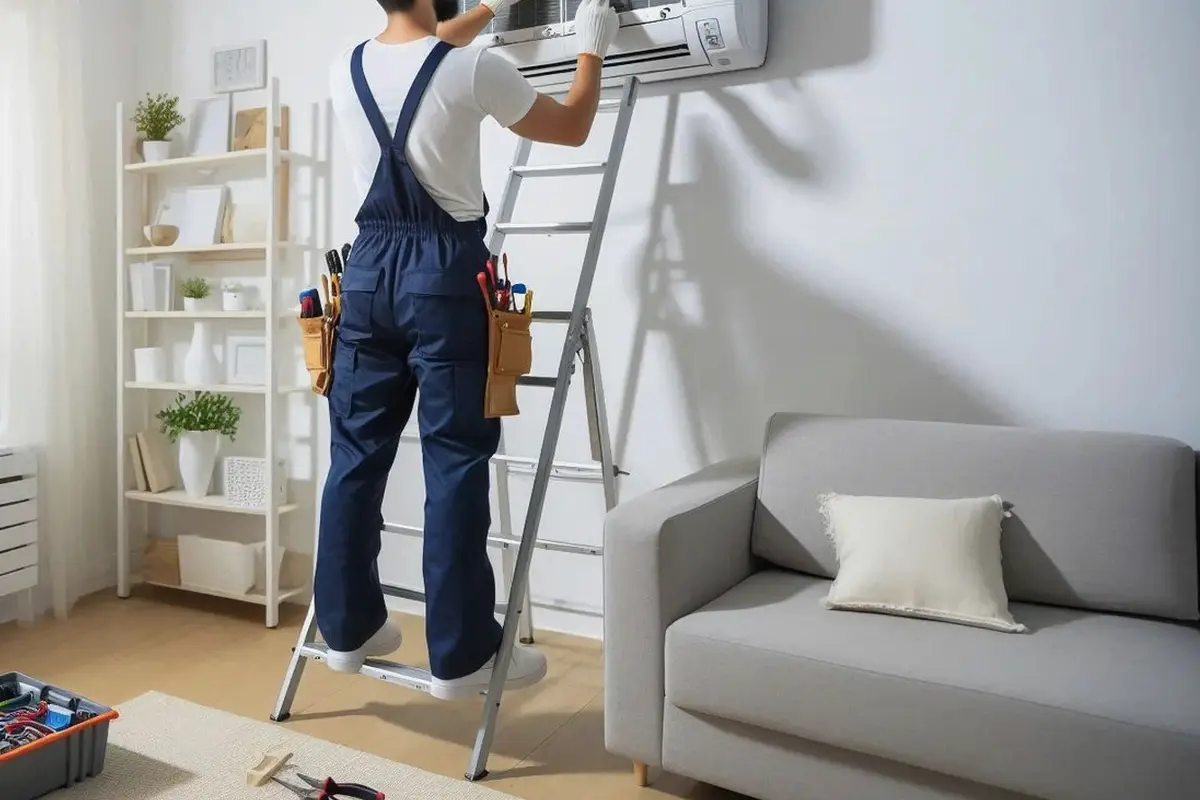
AC Compressor Repair & Replacement in San Bruno, CA
Outdoor unit humming, buzzing, or silent while the fan runs — compressor testing, hard-start options, and honest replacement guidance in San Bruno. Call (650) 555-0147 to connect with a local provider.
24/7 emergency phone lineLocal San Bruno providersWritten quote before workSe habla español
Compressor repair and replacement in San Bruno, CA covers the sealed pump in the outdoor unit that circulates refrigerant through the whole system. If the condenser fan runs but the air never cools, or the unit hums, clicks off, or trips the breaker, call (650) 555-0147. An independent provider tests the compressor before recommending replacement.
What AC Compressor Repair & Replacement Covers
The compressor is the engine of a central air conditioner. Sealed inside the outdoor unit, it squeezes refrigerant gas and pushes it through the circuit so heat can be collected indoors and dumped outside. When it weakens or fails, the rest of the system can be perfect — clean coils, full charge, strong blower — and the house still will not cool, because nothing is moving the refrigerant. Compressor calls are therefore the most consequential in AC repair: the diagnosis has to be right, because the remedy ranges from a small electrical part to the largest repair a system ever gets.
Compressors rarely die without a cause, and that cause matters as much as the failure itself. Running for years on a low refrigerant charge makes a compressor overheat. A failing capacitor forces hard starts that cook the start winding over time. Liquid refrigerant washing back into the compressor — from a frozen coil or an overcharge — dilutes its oil. In San Bruno, add the local pattern: systems that sit idle through long foggy stretches, then start under load on the hottest day of the year, with contactor points already corroded by damp air. Many a September compressor failure was really a two-dollar electrical part failing first, for months.
Capacitor and contactor ruled out before compressor is condemned
Winding, insulation and amp-draw testing
Burnout contamination testing on electrical failures
New filter-drier and deep evacuation on every swap
Itemized quotes — compressor vs new unit compared
Serving all of San Bruno, CA 94066
How the Problem Starts — and How It's Fixed
Testing separates four very different problems that all look like a dead compressor from inside the house. First, power and control: is the contactor actually closing and delivering both legs of power? Second, the capacitor: a weak run capacitor is the single most common reason a healthy compressor hums and will not start, and it is a small, inexpensive part. Third, the compressor itself: winding resistance and insulation are tested, amp draw is measured against the rated load, and a locked rotor is distinguished from an open winding or a compressor that starts but cannot pump — valves that no longer seal show normal electrics and useless pressures. Fourth, the history: charge level and airflow are checked so a new compressor is not installed into the condition that killed the old one.
When the compressor itself has failed, the options are replacement of the compressor or replacement of the outdoor unit or system, and the right answer depends on age, refrigerant type, and the condition of everything attached to it. A compressor swap is major surgery: recovery of the charge, opening the circuit, brazing in the new unit with nitrogen protection, a new filter-drier, deep evacuation, and a weighed-in charge. On a younger system using current refrigerant, that can be the economical path. On an older system — especially one using R-22 — the same money often goes further toward a new matched system, a comparison laid out in Repair or Replace a Central AC? How to Decide.
Signs You Need AC Compressor Repair
Call when the outdoor fan runs but the air indoors never gets cold, when the outdoor unit hums loudly for a few seconds and clicks off, when the breaker trips at the moment cooling starts, or when the outdoor unit is silent altogether while the indoor blower runs. Do not keep cycling the thermostat to coax it into starting — repeated start attempts against a locked or overheating compressor can turn a repairable electrical fault into a burned winding. Note what the outdoor unit does in the first ten seconds after a call for cooling, and tell the provider when you call (650) 555-0147; that observation shortens the diagnosis considerably.
Sign
Likely Cause
Urgency
Outdoor fan runs, air never cools
Compressor not pumping or not starting
Same day — needs electrical testing
Loud hum, then a click, repeatedly
Locked rotor or failed capacitor preventing start
Same day — stop cycling the thermostat
Breaker trips the instant cooling starts
Grounded compressor winding or shorted start components
Urgent — leave breaker off
Outdoor unit completely silent
Contactor, power, or control fault — possibly not the compressor
Same day
Cooling weak, pressures abnormal
Compressor valves no longer sealing (not pumping)
Schedule this week
Unit starts hard and rattles at startup
Weak capacitor or compressor wearing under hard starts
Schedule this week before it strands you
How the Work Gets Done
01
02
03
04
AC Compressor Repair & Replacement in San Bruno: The Local Picture
Compressor work in San Bruno is shaped by the city's retrofit history. Many homes in Belle Air Park and Capuchino cool with condensers married to indoor coils and furnaces of a different age and sometimes a different brand — mismatched combinations that work, but run their compressors at conditions the factory never tested as a pair. A careful provider checks the match before recommending a like-for-like compressor. The marine environment matters too: condensers near the bay side of the city show cabinet and coil corrosion that can make a compressor-only replacement a poor investment if the coil around it is also failing. Honest local advice weighs the whole outdoor unit, not just the part that stopped.
What It Costs — and What Moves the Price
Compressor cost in San Bruno is driven by the size and type of the unit, the refrigerant the system uses, and the labor of opening, evacuating and recharging the circuit — it is the largest single-part repair in residential cooling. That is precisely why the diagnosis has to be proven first: a meaningful share of no-start calls that sound like compressors end as capacitors, contactors or wiring, at a fraction of the cost. If the compressor truly has failed, your quote should itemize the compressor, refrigerant, filter-drier and labor, and should be presented alongside the price of a new outdoor unit or system when the system's age makes that comparison relevant. Never authorize a compressor replacement without hearing why it failed.
Safety, Prevention, and What to Do Next
A failed compressor can be an electrical event as well as a mechanical one. A winding that shorts to the compressor shell — a grounded compressor — will trip breakers and can contaminate the refrigerant circuit with acid formed during the burnout. Providers test for that contamination because installing a new compressor into an acid-contaminated circuit without cleanup and filtration shortens its life dramatically. For homeowners the rules are simpler: a breaker that trips at startup stays off, a unit that buzzes angrily and smells hot gets switched off at the thermostat, and no one should open a sealed compressor circuit — recovery, evacuation and charging are certified, equipped work.
Stop and call if:
You see sparking or scorch marks at the outdoor unit, smell burning electrical insulation, or the breaker trips again the moment the AC starts. Switch the system off at the thermostat and the breaker, then call (650) 555-0147 — and mention you need ac compressor repair & replacement, so you're routed to the right provider.
Common questions
Frequently Asked Questions
How do I know the compressor is really dead and it is not a smaller part?
Insist on the test results. A provider should be able to tell you the capacitor's measured value against its rating, whether the contactor delivers full power, the compressor winding resistances, and its amp draw if it runs. A healthy compressor prevented from starting by a weak capacitor hums and trips its overload; a grounded compressor trips the breaker instantly; a compressor with failed valves runs quietly and moves no pressure. Each has a different fix and a very different price.
What is a hard-start kit, and can it save my compressor?
A hard-start kit adds a start capacitor and relay that give an aging compressor extra torque for the first moments of each start. On a compressor that is mechanically sound but struggling to start — common after San Bruno's long idle months — it can restore reliable starting and extend service life. It cannot fix a grounded winding, failed valves, or a compressor that overheats while running, and a good provider will test first and tell you which case yours is rather than selling the kit as a cure-all.
Is it worth replacing a compressor, or should the whole system be replaced?
The usual deciding factors are age, refrigerant, and the condition of the coils. A compressor on a younger R-410A system with clean, sound coils is often worth replacing. A compressor failure on an older R-22 system, or one where the condenser coil is corroding from years of fog exposure, usually makes a new matched system the better money. The framework in Repair or Replace a Central AC? How to Decide walks the comparison; what matters is that you see both quotes.
Why did my compressor fail — will the new one fail the same way?
Only if the cause is not fixed. The leading causes are low refrigerant making the compressor run hot, a weak capacitor forcing hard starts, liquid refrigerant returning from a frozen or overcharged system, and electrical damage from a failing contactor. A proper replacement visit identifies and corrects the cause, replaces the filter-drier, and verifies charge and airflow afterward. Ask for the cause in writing; it is the difference between a repair and a repeat.
How long does a compressor replacement take?
Plan on most of a day. The charge must be recovered, the circuit opened and protected, the new compressor brazed in, a filter-drier fitted, the system evacuated to a deep vacuum, recharged by weight, and then run and verified through full cycles. Rushing the evacuation step is the classic false economy — moisture left in the circuit is what shortens the new compressor's life. A same-day finish is normal; a one-hour compressor swap should raise questions.
Can a compressor be repaired internally instead of replaced?
Residential compressors are hermetically sealed — the motor and pump live inside a welded steel shell that is not opened in the field. Internal failures therefore mean replacement of the unit. What can be repaired are the things around it: capacitors, contactors, wiring, mounts, and the charge and airflow conditions it depends on. That is why so much of compressor diagnosis is about proving whether the failure is internal at all before anyone quotes the sealed unit.
How this service works
A referral service — honest by design
This website is a referral and lead-generation service, not an air conditioning contractor. When you call, we connect you with independent local cooling providers serving San Bruno who perform the diagnosis, quote, and repair themselves.
Ask the provider who visits your home for their license, insurance, and written quote before any work begins — reputable local pros expect those questions. Learn more about how this service works.